

From Matter Room to Courtroom
Prove Who Had the Data, When, and Under What Controls
Legal matters increasingly span borders, organizations, and jurisdictions. Yet courts, regulators, and counterparties still rely on portable media for filings, exhibits, discovery, and evidentiary transfers.
Without encryption, access controls, and auditability, a single misplaced device can create regulatory exposure, professional liability, and reputational risk. DataLocker helps law firms secure portable legal data while supporting a defensible chain of custody aligned with European data-protection and security expectations.
Legal Use Cases

Cross-Border Matters & Data Transfers
- Challenge: Cross-border collaboration often requires sharing sensitive matter data across multiple jurisdictions. Firms may avoid ad-hoc cloud sharing due to uncertainty around data location, access, and cross-border exposure.
- Solution: DataLocker provides encrypted portable devices that align to workflows using centrally managed policies in SafeConsole. Firms can apply consistent access controls and maintain oversight of firm-issued devices used for cross-border collaboration.
- Result: Matter data can be transferred in a controlled, encrypted way, reducing exposure during cross-border collaboration and supporting documented handling practices.
Client/Vendor Ecosystems
- Challenge: eDiscovery providers, translators, expert witnesses, litigation support teams, co-counsel, and courts create multiple handoffs—often outside the firm’s direct control—where visibility is limited and risk increases.
- Solution: With DataLocker firm-issued encrypted USB devices and SafeConsole centralized controls, firms can enforce consistent security policies and maintain audit logs tied to device use and administrative actions.
- Result: Firms can reduce risk created by third-party workflows while maintaining consistent controls, oversight, and documentation across the matter lifecycle.


Court Filings, Exhibits, and Hearing Bundles via Portable Media
- Challenge: Portable media remains “how courts work” in many regions. Filings, exhibits, discovery productions, and hearing bundles often move via USB/media, courier, or in-person delivery—where loss/theft is common and visibility is low.
- Solution: DataLocker encrypted devices help protect court-bound data in transit. SafeConsole supports inventory, policy enforcement, and auditable records to reinforce controlled issuance and handling.
- Result: Firms can standardize a repeatable process for court media while reducing the likelihood and impact of loss, theft, or unauthorised access.
Privilege + Confidentiality Obligations
- Challenge: A single exposure can trigger professional conduct concerns, client notification obligations, contractual repercussions, and reputational harm—even if it’s “just one device.”
- Solution: DataLocker supports data on encrypted devices and access controls, all designed to protect confidentiality if a device is lost or delayed, while enabling centralized enforcement of firm security rules.
- Result: Firms reduce the likelihood that portable matter data becomes accessible to unauthorised parties and improve defensibility when questions arise.
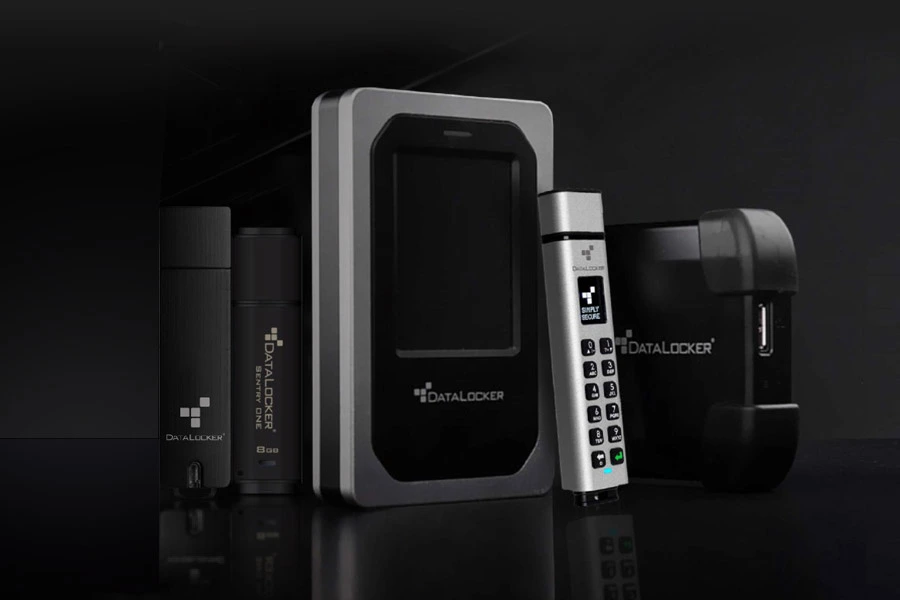
With DataLocker’s Encrypted USB Devices and SafeConsole Centralized Management


Lower Operational Friction
- Repeatable process for court media: Issue → Load → Seal → Handoff → Confirm Receipt → Archive/Return → Sanitize/Reuse
- Align to documented-transfer best practices (NIST Publications and UK NCSC)
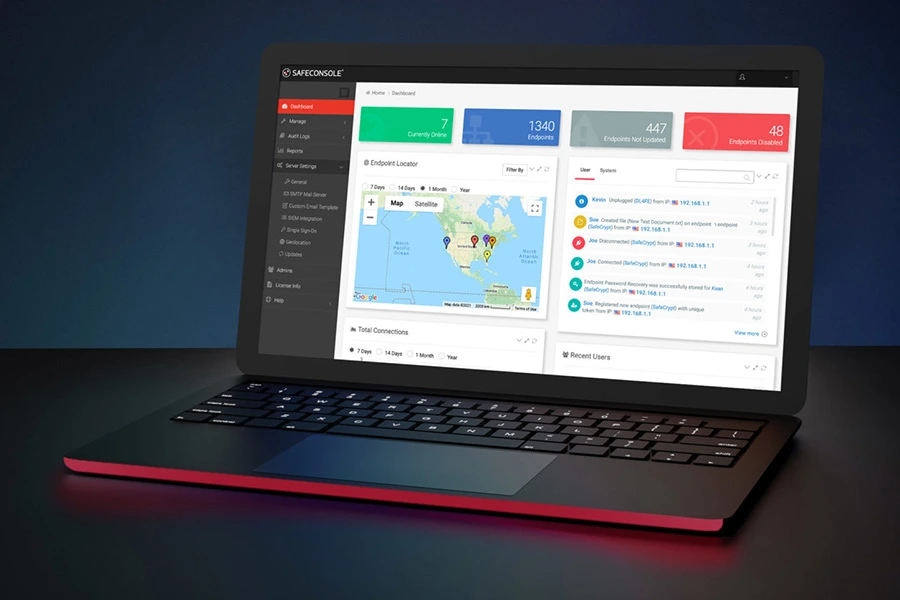
Get a SafeConsole Demo Today!
Ready to improve the security and defensibility of portable matter data across cross-border collaboration, third-party ecosystems, and court delivery workflows? Request a demo to review how DataLocker encrypted devices and SafeConsole policies support encryption, access control, auditability, and operational discipline.
Align with GDPR, Data Protection-by-Design, and Defensible Chain of Custody
Law firms are expected to apply appropriate technical and organisational measures to protect matter data—and to demonstrate those measures when questioned by clients, courts, regulators, or insurers.
This requires more than written policies. It requires encryption, controlled access, documented handling, and accountability that operate consistently across real-world legal workflows.
DataLocker supports this approach by aligning portable data handling with GDPR security expectations, data-protection-by-design principles, and recognised chain-of-custody best practices.

GDPR-Ready by Design: Encrypted, Policy-Controlled Portable Data
- GDPR Art. 32 – Security of Processing: Encryption and risk-appropriate technical controls
- Encryption as a Key Safeguard: Recognised technical measure for protecting personal data European Data Protection Board
- Breach Response Posture: Encrypted data can reduce risk severity and downstream impact
- Chain-of-Custody Discipline: Logging, documented transfer, and accountability support defensibility
- Certified Data Erasure: Cryptographic erasure provides verifiable, GDPR-aligned sanitization with audit-ready certificates
Data Protection by Design—Operationally for Matters
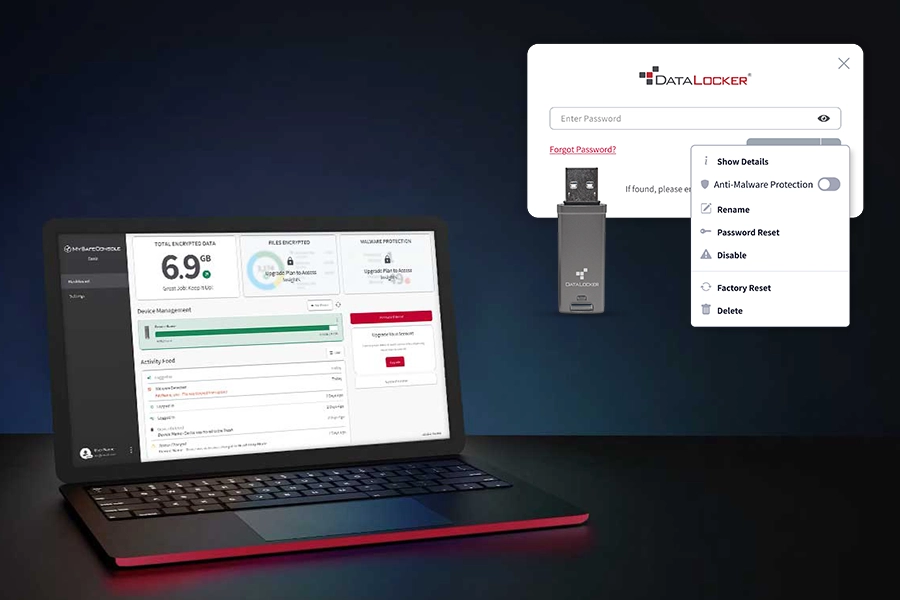
Tie DL GO + SafeConsole to encryption, access controls, managed policies, and auditability across the matter lifecycle.
- Least privilege for matter data (who can open it / when)
- Controlled distribution (only firm-issued devices; disable unmanaged devices)
- Central policy enforcement (password policy, lockout behavior, device state)
- Inventory + accountability (what exists, where it is, who last used it)
- Defensible Data Disposal (certified with audit-ready proof)

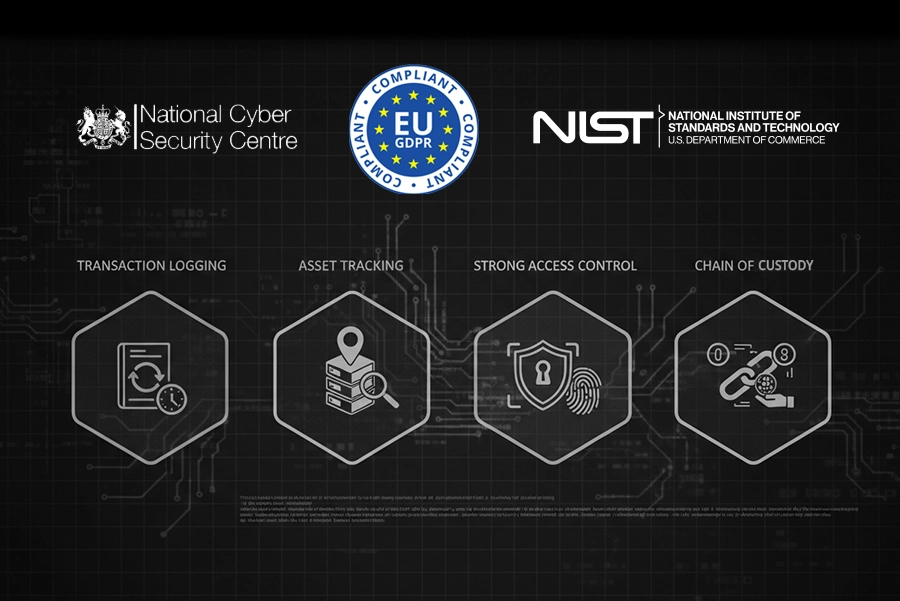
Chain of Custody: The Defensible and Documented
- Maintain an Auditable Record: Track device assignment, administrative actions, status changes, and certified data erasure events to support defensible documentation.
- Control Possession: Use formal checkout/return for court-bound or expert-bound media, with named custodians per matter.
- Prove Integrity: Pair controlled access with documented transfers to demonstrate files weren’t altered between firm and court.
Align with Recognised Security Best Practices
- Guernsey Cyber Security Centre (GCSC) guidance highlights the need to control and track removable media, including documented hand-offs and accountability, to reduce loss, misuse, and chain-of-custody risk.
- UK National Cyber Security Centre (NCSC) guidance emphasises logging, access controls, and auditability for removable media handling to support incident investigation and defensible data handling.
- UK GDPR, enforced by the Information Commissioner’s Office (ICO), requires appropriate technical and organisational measures—including encryption, controlled issuance, and traceability—when sensitive data is stored or transported on portable media.

Customer Testimonials in Legal


Effortless Data Security for Everyday Operations
The ease of use and robust encryption of DataLocker devices have made securing client data a seamless part of our day-to-day operations. Simplified Security Management for Law Firms
SafeConsole has streamlined our management of encrypted USB devices, allowing us to maintain control over sensitive case files and ensuring they remain protected, even during remote work.